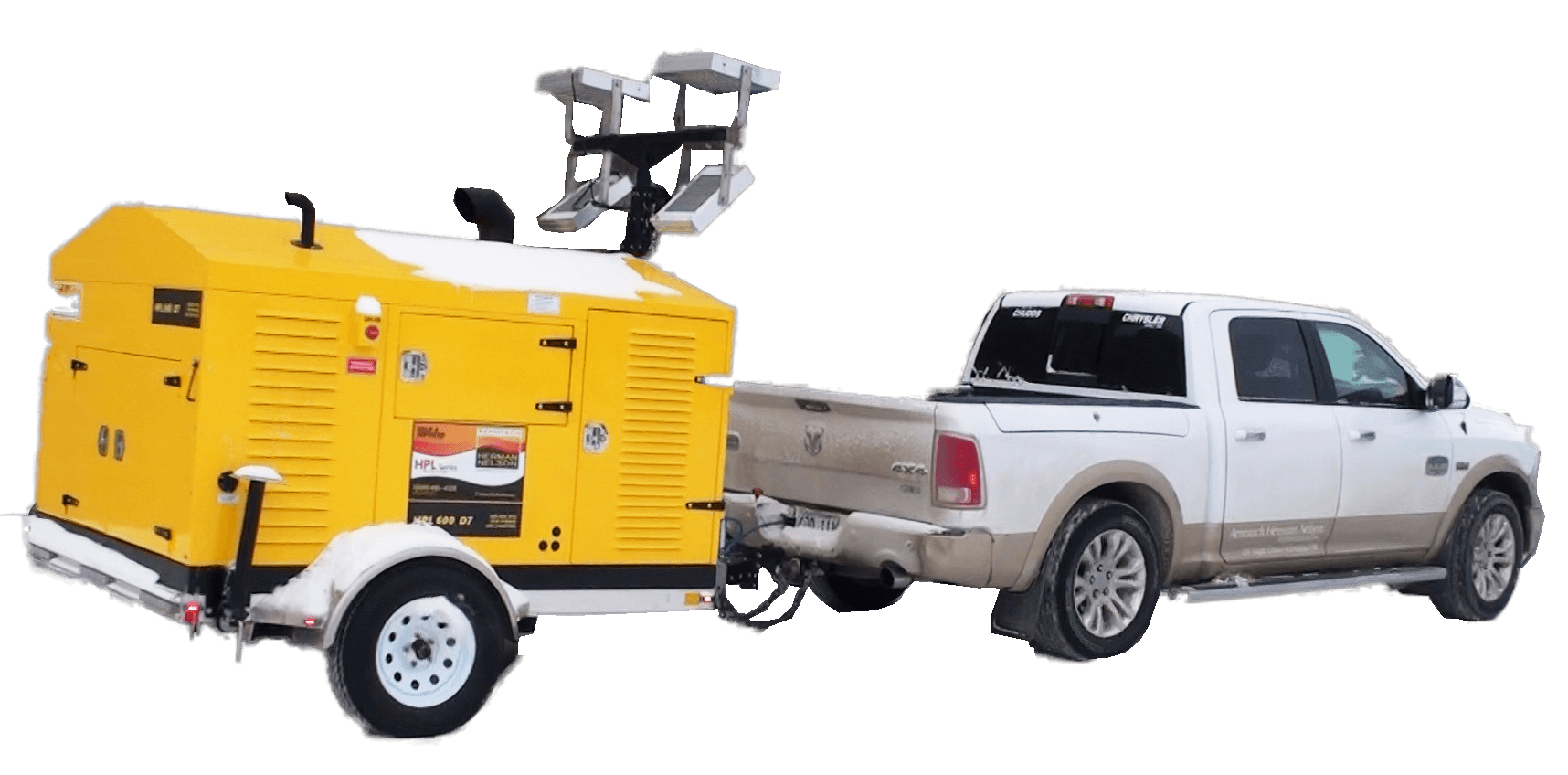
Where to Buy Industrial Indirect Heaters in Canada and the USA
Share this post
Knowledge Library
Industrial Heating Buying Guides
This article is part of the Aerotech Herman Nelson Knowledge Library, a collection of practical guides, technical resources, and expert advice designed to help professionals choose, operate, and maintain industrial heating equipment.
If you’re wondering where to buy industrial indirect heaters, the answer depends on your application, project requirements, and the level of support you expect after the purchase. Whether you’re heating an aircraft hangar, construction site, military deployment, industrial facility, or emergency response operation, choosing the right supplier is just as important as choosing the right heater.
Buying an industrial indirect heater is a significant investment. Beyond the purchase price, long-term success depends on reliable technical support, replacement parts availability, maintenance expertise, and selecting equipment that matches your application.
This guide explains where to buy industrial indirect heaters, the advantages of each purchasing option, and the key factors to evaluate before making a confident buying decision.
Where can you buy industrial indirect heaters?
If you’re wondering where to buy industrial indirect heaters, the answer depends on your application, budget, and the level of support you expect after the purchase. You can buy industrial indirect heaters from several sources, including manufacturers, authorized dealers, industrial equipment distributors, rental companies, and certified refurbished equipment suppliers.
The best purchasing option depends on your application, project duration, budget, required heating capacity, available fuel, and the level of technical support you expect after the sale. Organizations with long-term heating needs often benefit from purchasing directly from a manufacturer or authorized dealer. In contrast, organizations managing short-term construction projects or emergency deployments typically choose rental equipment because it offers flexibility without the long-term commitment of ownership.
When evaluating suppliers, consider not only the equipment itself but also warranty coverage, replacement parts availability, service support, operator training, and long-term maintenance programs.
💡 Buying Tip Choose a supplier that can support your equipment throughout its service life—not just on the day of purchase.
📖 About This Guide
This guide explains where to buy industrial indirect heaters, how to compare suppliers, and what to consider before making a purchase.
Reading Time
10–12 Minutes
Difficulty
🟢 Beginner
Last Updated
July 2026
Best For
Procurement Teams, Fleet Managers, Project Managers, Airport Operations, Construction Companies
Related Products
BT400 Series, HPL600D7, BT Blaze
Key Takeaways
✔ Industrial indirect heaters are available through manufacturers, dealers, rental companies, and refurbished equipment providers.
✔ The lowest purchase price is not always the lowest long-term cost.
✔ Factory technical support and replacement parts availability are critical considerations.
✔ Consider future maintenance, operator training, and service support before purchasing.
✔ Match the heater to your application rather than selecting solely on BTU output.
Who This Guide Is For
This guide is designed for:
Procurement Managers
Construction Project Managers
Fleet Managers
Airport Ground Operations
Military Logistics Personnel
Oil & Gas Operations
Mining Companies
Emergency Response Organizations
Equipment Rental Companies
Facility Managers
Where to Buy Industrial Indirect Heaters Is Only Part of the Decision
Knowing where to buy industrial indirect heaters is important, but knowing who will support your equipment for the next 10–20 years is even more important.
If you’re researching where to buy industrial indirect heaters, this guide will help you compare your options, understand what to look for in a supplier, and make a confident purchasing decision.
What Many Buyers Overlook When Choosing Where to Buy Industrial Indirect Heaters
When buying an industrial indirect heater, it’s easy to focus on specifications like BTU output, fuel type, and purchase price. While these are important, they don’t tell the whole story.
An industrial heater is a long-term investment, and the supplier you choose can have just as much impact on your experience as the equipment itself. Reliable technical support, readily available replacement parts, maintenance services, and knowledgeable staff all contribute to keeping your heater operating efficiently for years to come.
Before making a purchase, look beyond the initial price and consider the total value the supplier provides throughout the equipment’s service life. A heater backed by dependable support can reduce downtime, simplify maintenance, and help protect your investment for the long term.
💡 Buying Tip: A quality supplier doesn’t just sell you a heater—they help keep it running when you need it most.
Where Can You Buy Industrial Indirect Heaters?
There are five primary purchasing options for where to buy industrial indirect heaters, each suited to different operational needs.
1. Buy Directly from the Manufacturer
Purchasing directly from a manufacturer is often the best choice for organizations seeking expert product knowledge, factory support, warranty coverage, and long-term parts availability.
Advantages:
Factory-trained technical support
Access to genuine replacement parts
Engineering assistance
Warranty support
Product expertise
Direct access to new product information
Best suited for:
Large fleets
Airports
Government agencies
Military organizations
Construction companies
Industrial facilities
2. Authorized Dealers and Distributors
Authorized dealers offer regional inventory, local customer support, and product selection guidance. In addition, they can connect customers directly with the manufacturer for technical expertise, warranty support, and genuine replacement parts when needed.
Advantages:
Local inventory
Faster delivery
Regional sales support
Product demonstrations
Local service relationships
3. Equipment Rental Companies
For temporary heating requirements, renting may be the most economical option.
Rental equipment is commonly used for:
Temporary construction projects
Emergency response
Equipment shutdowns
Seasonal heating
Disaster recovery
Special events
If your heating requirements are short-term or seasonal, renting can reduce capital investment while still providing access to industrial-grade equipment.
4. Certified Refurbished Equipment
Professionally refurbished industrial heaters can offer excellent value when supplied by a reputable company.
Benefits include:
Lower purchase cost
Factory inspection
Reconditioned components
Available replacement parts
Technical support
Organizations should ensure that refurbished equipment has been inspected, tested, and serviced before purchase.
5. International Suppliers
For organizations operating internationally, selecting a supplier with export experience can simplify logistics and ongoing support.
Considerations include:
Shipping capabilities
Export documentation
Spare parts availability
Voltage requirements
Fuel compatibility
Local regulatory requirements
What to Look for in an Industrial Heater Supplier
Choosing the right supplier is about more than finding the lowest price. A quality supplier should provide the equipment, technical expertise, and long-term support needed to keep your operation running.
Before making a purchase, consider the following factors.
1. Industry Experience
Look for a supplier with experience in your industry. Heating requirements vary significantly between construction sites, aircraft maintenance, mining operations, military applications, and emergency response.
A knowledgeable supplier can recommend equipment based on your specific application rather than simply selling the largest heater available.
2. Technical Support
Questions don’t stop after the equipment is delivered.
Ask whether the supplier offers:
Technical troubleshooting assistance
Operator guidance
Product training
Maintenance recommendations
Access to service technicians
Reliable technical support can reduce downtime and help resolve issues quickly.
3. Parts Availability
Industrial heaters require routine maintenance throughout their service life.
Before purchasing, ask:
Are replacement parts readily available?
Are genuine OEM parts stocked?
How quickly can critical components be shipped?
Are parts expected to remain available for older models?
Access to parts is often more important than the initial purchase price.
4. Service and Maintenance Preventive maintenance extends equipment life and improves reliability.
Choose a supplier that can provide:
Scheduled maintenance
Annual inspections
Overhaul services
Repair support
Maintenance documentation
Long-term service support helps protect your investment.
5. Warranty Coverage
Understand exactly what is covered before purchasing.
Ask about:
Warranty duration
Covered components
Service procedures
Replacement parts
Warranty exclusions
A clear warranty provides confidence and reduces unexpected costs.
6. Choosing the Right Equipment
A reputable supplier should ask questions before recommending a heater.
Typical questions include:
What are you heating?
How large is the area?
What outside temperatures are expected?
What fuel is available?
Is clean, indirect heat required?
Will the heater operate continuously or intermittently?
If a supplier recommends equipment without understanding your application, it may be worth seeking a second opinion.
Quick Checklist Before You Buy
✔ Has experience with your industry
✔ Offers technical support
✔ Stocks replacement parts
✔ Provides maintenance and repair services
✔ Clearly explains warranty coverage
✔ Helps size the heater correctly
✔ Can support the equipment throughout its service life
How to Choose the Right Industrial Indirect Heater: A Step-by-Step Guide
Selecting the right industrial indirect heater involves more than choosing a BTU rating. The heater should be matched to your application, operating environment, fuel availability, and airflow requirements to ensure reliable performance and efficient operation.
Consider the following factors before making your decision.
1. Start with Your Heating Application
The first step in choosing an industrial indirect heater is understanding what you’re trying to heat and why.
Different applications have different heating requirements. A heater used to warm a construction site may not be the best choice for aircraft maintenance or emergency response operations.
Before comparing BTU ratings or fuel types, identify your primary application.
Application
Typical Heating Requirements
Recommended Aerotech Solution
Construction
Temporary building heat, concrete curing, worker comfort
Your application influences almost every aspect of heater selection, including:
Required BTU output
Airflow (CFM)
Fuel type
Ducting requirements
Portability
Operating environment
Runtime requirements
Choosing a heater based on your application first makes it much easier to select the correct equipment for the job.
Expert Tip: Don’t start by asking, “Which heater should I buy?” Start by asking, “What problem am I trying to solve?” The answer will usually lead you to the right heating solution.
2. Calculate the Required Heating Capacity
Heater size is typically measured in BTU/hr (British Thermal Units per hour).
Choosing a heater that is too small may not provide enough heat, while an oversized unit can reduce efficiency and increase fuel consumption. One of the biggest mistakes people make when deciding where to buy industrial indirect heaters is shopping for equipment before determining their actual BTU requirements. Calculating your heating needs first helps ensure you purchase a heater that delivers the right amount of heat for your application—not simply the one with the biggest specifications.
Factors that influence BTU requirements include:
Building size
Ceiling height
Outside temperature
Desired indoor temperature
Insulation quality
Air infiltration
Number of air changes
💡 Buyer Tip: Use our Industrial BTU Calculator to estimate the heating capacity required for your application.
3. Select the Right Fuel Type
The best fuel type isn’t simply a matter of preference—it’s determined by your job site, available fuel supply, operating environment, and the equipment you’re heating.
Before selecting a heater, consider which fuel is readily available and practical for your operation.
Fuel Type
Best For
Things to Consider
Diesel
Construction sites, mining, oil & gas, remote locations
Excellent where diesel equipment is already in use and fuel is readily available.
Gasoline
Smaller portable heaters and light-duty applications
Commonly available but typically used for smaller equipment rather than high-capacity industrial heaters.
Natural Gas
Facilities with an existing natural gas supply
Eliminates fuel refilling but requires access to a gas connection, making it best suited for fixed locations.
Propane
Temporary heating, commercial sites, and mobile applications
Clean-burning and portable, but requires propane cylinder or tank management.
Questions to Ask Before Choosing a Fuel
What fuel is already available at the job site?
Will the heater operate in a remote location?
How easy will it be to refuel during operation?
Does your organization already maintain diesel, propane, or natural gas equipment?
Are there site regulations or safety requirements that limit certain fuel types?
💡Technician’s Tip: In many industrial applications, choosing a heater that uses the same fuel as your existing equipment can simplify logistics, reduce downtime, and make refueling more efficient.
4. Consider Airflow and Ducting Requirements
Many buyers focus on BTU output, but how the heat is delivered is just as important.
An industrial heater can produce plenty of heat, but if it cannot move that heated air to where it’s needed, the space may never reach the desired temperature.
This is where airflow (CFM) and ducting requirements become critical.
Why Airflow Matters
Airflow, measured in cubic feet per minute (CFM), determines how much heated air the heater can deliver.
Higher airflow helps:
Move warm air farther from the heater
Heat larger spaces more evenly
Improve air circulation
Reduce cold spots within the heated area
A heater with the right BTU output but insufficient airflow may struggle to maintain consistent temperatures throughout the space.
Can Your Heater Deliver the Heat?
If heated air needs to travel any significant distance, your ducting requirements become just as important as the heater itself.
Long duct runs, multiple duct outlets, and complex air distribution systems create resistance (static pressure). If the heater isn’t designed to overcome that resistance, less heated air reaches the area where it’s needed, reducing overall heating performance.
Before Selecting a Heater, Consider:
How far will the heated air travel?
Will you need one duct or multiple duct outlets?
Will the heater remain outside while warm air is ducted indoors?
Do you need to heat one large space or several smaller areas?
Will the heater need enough airflow and static pressure to maintain consistent heat throughout the system?
The answers to these questions will help determine whether a heater can deliver warm air effectively to your application—not just produce heat.
💡Technician’s Tip: Two heaters may have similar BTU ratings, but they won’t necessarily perform the same. A heater with the proper airflow (CFM) and static pressure can move heated air farther and more efficiently through long duct runs, helping maintain consistent temperatures where the heat is actually needed.
5. Consider the Environment Where the Heater Will Operate
The environment where an industrial heater operates can have a significant impact on its performance, reliability, and maintenance requirements.
A heater used inside an aircraft hangar faces very different challenges than one operating on an exposed construction site in the middle of winter. Understanding your operating conditions helps ensure you select equipment that is built for the job.
Questions to Consider
Before choosing a heater, ask yourself:
Will the heater operate outdoors or inside a structure?
Will it be exposed to extreme cold, wind, snow, or rain?
Is the worksite dusty or prone to airborne debris?
Will the heater run continuously for extended periods?
Is the job site remote with limited access to fuel, electricity, or service support?
The answers to these questions can influence everything from fuel selection and runtime requirements to maintenance intervals and equipment configuration.
Common Operating Environments
Extreme Cold
Select equipment designed to start and operate reliably in low temperatures.
High Winds
Wind increases heat loss and may require additional heating capacity or different duct placement.
Dusty Job Sites
Dust and debris can increase maintenance requirements and reduce airflow if filters or heat exchangers are not inspected regularly.
Remote Locations
Consider fuel availability, runtime, replacement parts, and ease of field maintenance.
Continuous Operation
Equipment operating for extended periods should be supported by a preventive maintenance schedule to maximize reliability.
💡Expert Tip
Don’t choose a heater based only on ideal conditions.
Choose one that will perform reliably on your worst day—whether that’s a remote construction site at -30°C, a windy airport apron, or a critical emergency response deployment.
Reliable heat is most important when conditions are at their most challenging. The best industrial heater isn’t the one with the biggest specifications—it’s the one that’s designed to perform reliably in your operating environment.
6. Consider the Support You’ll Need After the Sale
One of the biggest mistakes buyers make is assuming every supplier offers the same level of support. In reality, access to knowledgeable technicians, replacement parts, and service can vary significantly. Before purchasing, ask what support will still be available five or even ten years from now—not just next week.
Buying an industrial indirect heater is only the beginning. Throughout its service life, the equipment will require routine maintenance, replacement parts, technical assistance, and occasional repairs.
The quality of the support you receive after the sale can have a direct impact on equipment uptime, operating costs, and the overall life of your heater.
Before making your decision, don’t just compare the equipment—ask what happens after the heater is delivered.
Questions Every Buyer Should Ask
A reputable supplier should be able to answer questions such as:
Are replacement parts readily available?
Do you provide technical support if a problem occurs?
Can the heater be serviced or overhauled?
Is operator training available?
What does the warranty cover?
How quickly can critical parts be shipped during the heating season?
The answers to these questions can be just as important as the equipment specifications.
Why Long-Term Support Matters
Industrial heaters are often used during critical operations where downtime can delay work, increase costs, or interrupt essential services.
Choosing a supplier that offers ongoing technical support and readily available replacement parts helps keep your equipment operating when it matters most.
Whether your heater is used for a winter construction project, aircraft maintenance, emergency response, or a remote industrial site, dependable support can make the difference between a minor repair and a costly shutdown.
What to Look For in a Supplier
Technical Support
Helps diagnose and resolve problems quickly.
Replacement Parts
Reduces downtime during maintenance or repairs.
Preventive Maintenance
Extends equipment life and improves reliability.
Operator Training
Helps users operate the heater safely and efficiently.
Warranty Support
Protects your investment and simplifies warranty claims.
Expert Tip: Don’t just compare the equipment—compare the company standing behind it. A reliable supplier should continue supporting your heater long after the initial purchase.
Industrial Indirect Heater Procurement Checklist
Before purchasing an industrial indirect heater, make sure you can answer “Yes” to the following questions.
Heating Requirements
☐ Do I know my required BTU output?
☐ Have I identified the correct heating application?
☐ Will the heater provide enough airflow (CFM) for my application?
☐ Have I considered ducting length and air distribution requirements?
Job Site & Operation
☐ Is the heater suitable for my operating environment (cold, wind, dust, remote locations)?
☐ Is the appropriate fuel readily available at the job site?
☐ Will the heater operate continuously or only during specific periods?
☐ Does the heater meet the requirements of my project or facility?
Supplier & Support
☐ Does the supplier provide knowledgeable technical support?
☐ Are replacement parts readily available?
☐ Is maintenance or overhaul service available if needed?
☐ Do I understand the warranty and after-sales support?
Before You Purchase
☐ Have I compared more than one supplier?
☐ Do I understand the total cost of ownership—not just the purchase price?
☐ Am I confident this heater is the right solution for my application?
Need Help Choosing the Right Heater?
If you’re unsure which industrial indirect heater is right for your application, our team can help evaluate your heating requirements based on your project, environment, fuel availability, and required BTU output.
One of the most common sizing mistakes is selecting a heater based only on the square footage of a building. Experienced technicians also consider insulation, outside temperature, airflow, duct length, and how the space will actually be used. Taking these factors into account helps ensure consistent heat delivery and can prevent underperforming or oversized systems.
7. Should You Buy New, Rent, or Choose a Refurbished Heater?
One of the most common questions we hear is:
“Should I buy a new heater, rent one, or consider a refurbished unit?”
The answer depends on how often you’ll use the equipment, the length of your project, your available budget, and your long-term operational needs.
Each option has advantages, and the best choice isn’t always the lowest initial cost.
Comparing Your Options
Option
Best For
Advantages
Things to Consider
Buy New
Organizations with ongoing or seasonal heating requirements
Full warranty, latest technology, maximum service life, lower long-term ownership costs
Lower upfront cost, immediate availability, no long-term ownership
Rental costs can exceed ownership costs on longer projects
Refurbished
Budget-conscious organizations looking for dependable equipment
Lower purchase price while retaining many of the benefits of ownership
Purchase from a reputable supplier that provides inspection records, parts availability, and technical support
Which Option Is Right for You?
Ask yourself:
Will this heater be used every winter?
Is this a one-time project or part of ongoing operations?
Would ownership reduce future rental expenses?
Do you have the resources to maintain the equipment?
What is the total cost over the next five years—not just today?
For organizations that rely on industrial heating every season, purchasing equipment often provides the best long-term value. For short-term or emergency applications, renting may be the most practical solution. Refurbished equipment can be an excellent middle ground when purchased from a trusted supplier.
💡 Buying Tip: Don’t compare only the purchase price. Compare the total cost of ownership over the expected life of the equipment.
Avoid These Costly Mistakes When Buying an Industrial Indirect Heater
Even experienced buyers can overlook important details when selecting an industrial indirect heater. While BTU output and purchase price are important, they are only part of the decision.
The infographic below highlights six of the most common mistakes we see—and more importantly, how to avoid them.
Whether you’re purchasing your first industrial heater or expanding an existing fleet, taking a few minutes to review these considerations can help reduce downtime, avoid unnecessary costs, and ensure the equipment you choose is the right fit for your application.
💡 Expert Insight: The best buying decisions aren’t made by comparing specifications alone. They’re made by understanding the application, evaluating the operating environment, and choosing a supplier that can support the equipment for years to come.
Frequently Asked Questions About Where to Buy Industrial Indirect Heaters
Below are answers to some of the most common questions people ask when searching where to buy industrial indirect heaters.
Purchasing Questions
Where can I buy industrial indirect heaters?
Industrial indirect heaters can be purchased directly from manufacturers, through authorized dealers, industrial equipment distributors, rental companies, or certified refurbished equipment suppliers. The best option depends on your application, budget, project duration, and the level of technical support you require after the purchase.
Should I buy directly from the manufacturer?
Buying directly from the manufacturer can provide access to factory expertise, technical support, warranty service, and genuine replacement parts. However, an authorized dealer with strong local support may also be an excellent choice. The most important factor is choosing a supplier that can support your equipment throughout its service life.
Is renting an industrial heater better than buying?
Renting is often the best option for short-term projects, emergency response, or seasonal demand. Purchasing generally provides better long-term value for organizations that rely on industrial heating year after year.
Are refurbished industrial heaters reliable?
Yes—provided they have been properly inspected, refurbished, and supported by a reputable supplier. Before purchasing a refurbished heater, ask about its service history, inspection process, warranty, and replacement parts availability.
What is the biggest mistake buyers make when purchasing an industrial heater?
One of the most common mistakes is choosing equipment based solely on purchase price. The best buying decisions consider the application, required heating capacity, airflow, operating environment, maintenance requirements, and the supplier’s ability to provide long-term support.
Equipment Selection Questions
How long do industrial indirect heaters last?
The service life of an industrial indirect heater depends on operating conditions, maintenance, and usage. With proper preventive maintenance and access to quality replacement parts, industrial heaters are designed to provide many years of dependable service.
What size industrial heater do I need?
The correct heater size depends on the area being heated, desired indoor temperature, outside weather conditions, insulation levels, and your specific application. A BTU calculation should always be completed before selecting equipment.
What fuel type is best for an industrial indirect heater?
There is no single best fuel type. Diesel, gasoline, propane, and natural gas each have advantages depending on fuel availability, operating environment, and the application. Choose the fuel that best supports your job site and operational requirements.
How often should an industrial heater be serviced?
Industrial heaters should be inspected before each heating season and serviced according to the manufacturer’s maintenance schedule. Regular inspections help improve reliability, reduce downtime, and extend equipment life.
What is the difference between an indirect-fired heater and a direct-fired heater?
An indirect-fired heater uses a heat exchanger to keep combustion gases separate from the heated air, delivering clean, dry heat. A direct-fired heater introduces combustion gases into the heated air stream, making it better suited for applications where fresh air requirements differ.
Maintenance & Support Questions
How often should an industrial heater be serviced?
Industrial heaters should be inspected before each heating season and serviced according to the manufacturer’s maintenance schedule. Regular inspections help improve reliability, reduce downtime, and extend equipment life.
What is the difference between an indirect-fired heater and a direct-fired heater?
An indirect-fired heater uses a heat exchanger to keep combustion gases separate from the heated air, delivering clean, dry heat. A direct-fired heater introduces combustion gases into the heated air stream, making it better suited for applications where fresh air requirements differ.
What should I look for when choosing a heater supplier?
Look for a supplier that offers knowledgeable technical support, readily available replacement parts, warranty coverage, maintenance services, and experience with your industry. Long-term support is often just as important as the equipment itself.
Can one industrial heater be used for different applications?
Many industrial indirect heaters are suitable for multiple applications, including construction, aircraft maintenance, industrial facilities, emergency response, and temporary heating. The key is selecting equipment with the appropriate heating capacity, airflow, and configuration for each use.
Whether you’re purchasing your first unit or expanding an existing fleet, knowing where to buy industrial indirect heaters is only one part of the decision. Understanding your application, heating requirements, and long-term support options will help you choose equipment that delivers reliable performance for years to come.
Still Not Sure Which Heater Is Right?
Knowing where to buy industrial indirect heaters is just the first step. Choosing the right heater requires an understanding of your application, heating requirements, operating environment, fuel availability, and long-term operational goals.
If you need assistance, our team is ready to help. We’ll work with you to evaluate your project, recommend the most suitable equipment, and answer your technical questions so you can make a confident purchasing decision.
Because the right heater isn’t simply the one you buy—it’s the one that’s right for your application.
Selecting the right industrial indirect heater is just one part of building a reliable heating solution. The resources below can help you calculate heating requirements, compare equipment, plan maintenance, and make more informed purchasing decisions.
Continue Your Research
📖 Industrial Heater Selection Guide Learn the complete process for selecting the right industrial heater based on your application, heating requirements, fuel type, and operating conditions.
🧮 Industrial BTU Calculator Estimate the heating capacity required for your building, aircraft hangar, construction site, or temporary structure.
⚖️ Indirect vs. Direct-Fired Heaters Understand the differences between indirect-fired and direct-fired heaters, including when each technology is the better choice.
📋 Industrial Heater Procurement Checklist(Free Download) Download our printable procurement checklist to evaluate heating requirements, operating conditions, supplier support, and purchasing considerations before investing in new equipment.
📚 Download Equipment Manuals Access operator manuals, service information, and technical documentation for Aerotech Herman Nelson heating equipment.
Still Not Sure Which Industrial Heater Is Right?
Choosing the right industrial indirect heater involves more than comparing BTU ratings, fuel types, or purchase prices. The best solution depends on your application, operating environment, airflow requirements, project duration, and the level of support you’ll need throughout the equipment’s service life.
Whether you’re heating a construction site, aircraft hangar, industrial facility, emergency response operation, or remote worksite, taking the time to evaluate your requirements now can help avoid costly mistakes later.
If you’re unsure which heater is right for your application, our team is here to help.
Our heating specialists can assist you with:
Determining the correct BTU requirements
Comparing industrial heater models
Selecting the appropriate fuel type
Evaluating airflow and ducting requirements
Recommending the best solution for your application
Answering technical questions before you purchase
Our goal isn’t simply to sell equipment—it’s to help you choose the right heating solution for your operation.
Yes. Many manufacturers sell directly or through authorized dealers.
Can I rent an industrial heater?
Yes. Renting is often the best choice for temporary, emergency, or seasonal projects.
Are refurbished heaters worth considering?
Yes. Professionally refurbished equipment can provide excellent value when supported with replacement parts and technical expertise.
What’s the first step before buying?
Identify your heating application and calculate the required BTU output before comparing equipment.
How can Aerotech help?
Our team can evaluate your application, answer technical questions, and recommend the right industrial heating solution for your needs.
Final Thoughts
Choosing an industrial indirect heater is an investment in the safety, productivity, and reliability of your operation. The more informed your decision, the more value you’ll receive throughout the equipment’s service life.
We hope this guide has helped you better understand where to buy industrial indirect heaters and the factors that should influence your purchasing decision.
Because choosing the right heater today helps prevent downtime tomorrow.
When temperatures begin to fall, industrial heating equipment becomes an essential part of keeping construction projects, aviation operations, industrial facilities and remote worksites running. But
Knowledge Library Industrial Heating Buying Guides This article is part of the Aerotech Herman Nelson Knowledge Library, a collection of practical guides, technical resources, and
Construction Heating BTU Requirements Explained Construction heating BTU requirements are determined by the building volume, outdoor temperature, desired indoor temperature, building enclosure status, air infiltration,
We use cookies on our website to give you the most relevant experience by remembering your preferences and repeat visits. By clicking “Accept”, you consent to the use of ALL the cookies.
This website uses cookies to improve your experience while you navigate through the website. Out of these cookies, the cookies that are categorized as necessary are stored on your browser as they are essential for the working of basic functionalities of the website. We also use third-party cookies that help us analyze and understand how you use this website. These cookies will be stored in your browser only with your consent. You also have the option to opt-out of these cookies. But opting out of some of these cookies may have an effect on your browsing experience.
Necessary cookies are absolutely essential for the website to function properly. This category only includes cookies that ensures basic functionalities and security features of the website. These cookies do not store any personal information.
Any cookies that may not be particularly necessary for the website to function and is used specifically to collect user personal data via analytics, ads, other embedded contents are termed as non-necessary cookies. It is mandatory to procure user consent prior to running these cookies on your website.
×
1
Product selection
2
Contact information
3
Review information
2025 - 2026 Holiday Business Hours
Happy holidays
December 24
Open 8:00 AM – 12:00 PM CDT
December 25
Closed
December 26
Closed
December 29
Open 8:00 AM – 4:30 PM CDT
December 30
Open 8:00 AM – 4:30 PM CDT
December 31
Open 8:00 AM – 12:00 PM CDT
January 1
Closed
January 2
Open 8:00 AM – 4:30 PM CDT
Need immediate assistance while we’re closed?
Call (204) 995-2999.