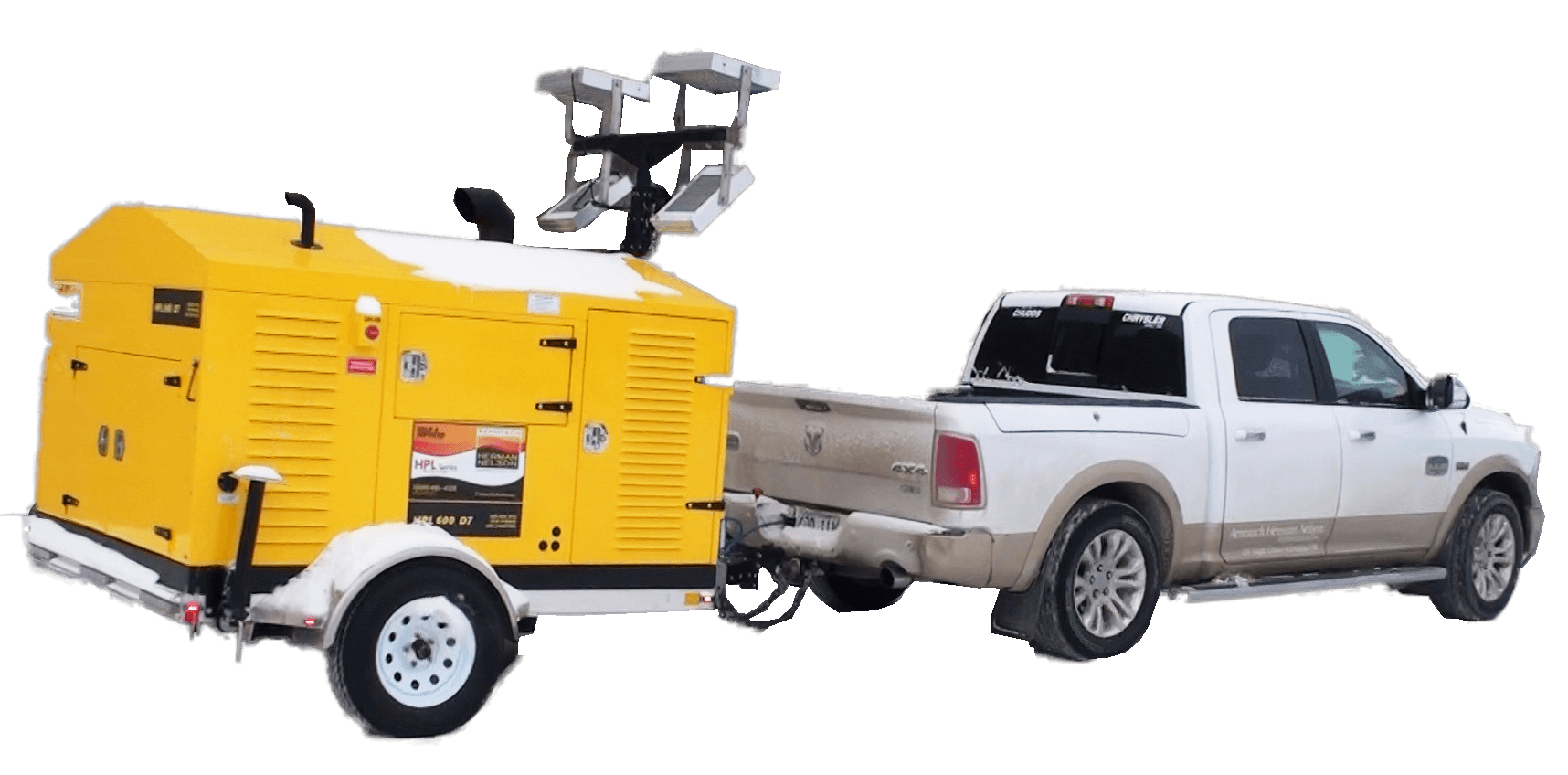
When temperatures begin to fall, industrial heating equipment becomes an essential part of keeping construction projects, aviation operations, industrial facilities and remote worksites running.
But having a heater available doesn’t necessarily mean you’re ready for winter.
Equipment that operated successfully last season may still require maintenance. Upcoming projects may have different heating requirements. Fuel availability, airflow, ducting and operating conditions can also affect whether a heating system performs as expected.
And discovering an equipment problem after temperatures have already dropped can create unnecessary complications.
Whether you’re preparing an existing fleet of industrial heaters or evaluating additional equipment for the upcoming season, now is the time to review your heating requirements.
Here are seven practical steps to help prepare your industrial heating operations for winter.
Quick Answer: How Do You Prepare an Industrial Heater for Winter?
Preparing an industrial heater for winter involves inspecting and servicing existing equipment, confirming fuel and electrical systems are operational, checking airflow and ducting, testing the heater before deployment, and evaluating whether available heating capacity meets upcoming requirements.
Operators should also confirm that replacement parts, technical documentation, qualified service personnel and appropriate backup heating arrangements are available before cold weather arrives.
The exact inspection and maintenance procedures depend on the heater model and manufacturer’s recommendations.
1. Review Your Upcoming Heating Requirements
Before inspecting equipment or purchasing additional heaters, review where your operations will need heating.
A construction company preparing several projects may have very different needs from an aviation maintenance operation or an oil and gas company supporting a remote worksite.
Even within the same industry, heating requirements can vary considerably.
Consider the following questions:
- What areas or equipment will require heating?
- When will heating be required?
- How long will the equipment need to operate?
- What temperatures could the site experience?
- Will the heating equipment be located indoors or outdoors?
- Are there ventilation or site safety requirements?
- Will equipment need to move between locations?
- Is backup heating capacity required?
For construction projects, this review should also consider how heating requirements may change as work progresses.
An unfinished building with exposed openings can have very different heating requirements from the same structure once workers complete the building envelope.
The goal is to establish what your upcoming operations require before deciding whether your existing heating equipment is sufficient.
2. Calculate Your Heating Capacity Requirements
One of the most important parts of winter heating preparation is determining how much heat your application actually requires.
Industrial heaters are commonly compared using British Thermal Units per hour (BTU/h), which describe the rate of heat output or input, depending on the specification being quoted.
However, choosing equipment based on BTU ratings alone can lead to an incomplete heating plan.
The amount of heat required depends on several factors, including:
Space dimensions
The size and volume of the area being heated influence the amount of energy required to raise its temperature.
Insulation
Well-insulated spaces generally retain heat more effectively than partially enclosed or unfinished structures.
Outdoor temperatures
The difference between the outside temperature and the desired working temperature affects the heating requirement.
Air exchange
Open doors, ventilation systems and other sources of air movement can increase heat loss.
Airflow and ducting
The heater must be capable of delivering heated air to the required location.
A heater may have sufficient heating capacity on paper but still struggle to meet the application’s requirements if the complete air-delivery system isn’t considered.
Start with our BTU Calculator
Aerotech Herman Nelson provides an online calculator to help estimate heating requirements based on space dimensions, insulation and temperature differences.
It’s a useful starting point when planning temporary construction heating, industrial heating or other cold-weather applications.
Calculate Your Heating Requirements with Our BTU Calculator →
The calculator provides an initial estimate. Final equipment selection should also account for airflow, ducting, ventilation, site conditions and the specific requirements of the application.
3. Inspect Your Existing Industrial Heating Equipment
Before returning an industrial heater to service, review its condition and maintenance history.
Equipment that has been sitting in storage for several months may require attention before it can be relied upon during continuous winter operations.
Start with the manufacturer’s operating and maintenance documentation for your specific heater model.
Important areas to inspect
| Component | What to review |
|---|---|
| Fuel system | Fuel condition, hoses, connections, filters and signs of leakage |
| Electrical system | Battery condition, wiring, connections and visible damage |
| Combustion system | Burner condition and maintenance requirements |
| Airflow system | Fans, air inlets, outlets and obstructions |
| Ducting | Physical condition, connections and suitability for the application |
| Exhaust system | Condition, routing and clearance requirements |
| Safety controls | Required inspections and functional checks specified by the manufacturer |
| General condition | Corrosion, damage, loose components and signs of deterioration |
The exact checklist will depend on the heater’s design, fuel type and configuration.
Never bypass safety controls or continue operating equipment with unresolved safety-related faults. Repairs and testing should be performed according to the manufacturer’s procedures by appropriately qualified personnel.
Don’t overlook the heating accessories
A heater is only one part of the complete heating system.
Ducting, adapters, thermostats, fuel supply equipment and other accessories should also be reviewed before deployment.
Damaged or unsuitable ducting can interfere with heat delivery, while missing accessories may delay equipment setup when heating is needed.
Preparing these components in advance helps ensure the complete heating system is ready—not just the heater itself.
4. Test Your Industrial Heaters Before Deployment
An industrial heater should not be considered ready for winter simply because it starts.
A pre-season operational test can help identify problems that may not be apparent during a visual inspection.
Follow the manufacturer’s approved startup, operating and shutdown procedures, including all required ventilation, exhaust and clearance precautions.
Depending on the equipment, testing may help reveal:
- Starting difficulties
- Fuel delivery problems
- Unexpected shutdowns
- Abnormal smoke or combustion behaviour
- Reduced airflow
- Unusual vibration or noise
- Overheating
- Control or electrical problems
Any abnormal operation should be investigated before the heater is returned to service.
For businesses operating multiple heaters, documenting the results of pre-season testing can help identify which units are ready for deployment and which require additional maintenance.
Troubleshooting your Herman Nelson BT400 NEX?
For operators using the diesel-powered BT400 NEX Series, Aerotech Herman Nelson has developed an interactive troubleshooting resource.
The guide helps users navigate common operating problems, including engine starting difficulties, fuel-system concerns, ignition problems, smoking and overheating.
It also provides troubleshooting paths, parts references and additional support information.
Access the BT400 NEX Interactive Troubleshooting Guide →
The interactive PDF is designed to be opened with Adobe Acrobat Reader for full functionality.
This resource can be particularly useful for rental companies, maintenance teams and organizations preparing multiple BT400 NEX heaters for winter operations.
5. Confirm Parts, Service and Technical Support Availability
One commonly overlooked part of winter preparation is ensuring that support is available when equipment requires attention.
An industrial heater may operate for extended periods in demanding environments.
That makes routine maintenance, replacement parts and technical support important considerations—not just during the purchasing process, but throughout the equipment’s service life.
Before the heating season, consider reviewing:
Maintenance requirements
Are any scheduled service procedures due before the equipment returns to operation?
Replacement parts
Are the parts required for routine maintenance available?
Technical documentation
Do operators and maintenance personnel have access to the correct manuals for their equipment?
Service requirements
Are there outstanding repairs that should be completed before the heater is deployed?
Operator familiarity
Are the people responsible for operating the equipment familiar with the correct startup, shutdown and basic troubleshooting procedures?
Organizations managing multiple heaters may benefit from maintaining a simple equipment readiness record.
This can help you identify which units are ready for use, which need maintenance and which require repairs before deployment.
Keep your equipment documentation accessible
Aerotech Herman Nelson provides operating manuals and technical resources for several heater models, including the BT400 NEX Series.
Access Industrial Heater Manuals and Technical Documentation →
Keeping the correct documentation readily available can make a significant difference when performing maintenance or troubleshooting equipment in the field.
6. Identify Gaps in Your Available Heating Capacity
Preparing existing equipment is important, but winter readiness also involves understanding whether your current heating capacity will meet upcoming requirements.
Consider a construction company with several active projects.
Its existing heaters may be fully operational, but additional projects could increase demand for equipment the company has already assigned to other locations.
Similarly, a rental company may have enough equipment for typical demand but limited flexibility when several customers require heating at the same time.
Ask yourself:
- Will our existing equipment cover all upcoming projects?
- Are any heaters already committed to other locations?
- Will new projects require different heating capacities?
- Do we have suitable equipment for the expected operating conditions?
- Will additional ducting or accessories be required?
- What happens if an existing heater becomes unavailable?
Identifying these requirements before winter can provide more time to evaluate available heating options.
Consider the complete heating application
Not every heating requirement calls for the same equipment.
A temporary construction site may require an indirect-fired heater capable of delivering heated air through ducting.
A different application may require recirculating equipment or another heating configuration.
Consider fuel availability, operating hours, airflow, site conditions and safety requirements when evaluating additional equipment.
Frost Fighter: Temporary Heating for Construction and Industrial Applications
For organizations evaluating additional temporary heating capacity, the Frost Fighter lineup includes indirect-fired heaters designed for construction and industrial heating applications.
Available models include:
| Frost Fighter model | Listed heating capacity |
|---|---|
| IDF 350 | 350,000 BTU/h |
| IDF 500 | 420,000 BTU/h |
| IHS 700 | 700,000 BTU/h |
| IHS 1250 | 1,250,000 BTU/h |
Fuel configurations, airflow, ducting capabilities and other specifications vary by model.
These differences matter when matching a heater to the demands of a particular jobsite.
Explore Frost Fighter Industrial Heating Solutions →
For a broader comparison of available industrial heating equipment, visit the Aerotech Herman Nelson Heater Catalogue.
Browse the Complete Industrial Heater Catalogue →
7. Finalize Your Winter Heating and Equipment Deployment Plan
Once you’ve reviewed your requirements, inspected existing equipment and identified any additional heating needs, bring that information together into a practical deployment plan.
This doesn’t have to be complicated.
The objective is to ensure that the appropriate equipment is available, operational and ready when each project or application requires it.
Your plan should identify:
Equipment assignments
Which heater will be used at each location?
Heating requirements
What heating capacity and airflow are required for each application?
Fuel requirements
What fuel supply arrangements are needed for the expected operating period?
Ducting and accessories
Is the complete heating system available and suitable for the application?
Maintenance status
Has the equipment completed its required inspections, maintenance and testing?
Operator readiness
Are operators familiar with the equipment and its operating procedures?
Backup arrangements
What options are available if a heater requires service or an application needs additional heating capacity?
For businesses managing several projects or a large equipment fleet, this information can help reduce uncertainty as winter operations become more demanding.
Industrial Heater Winter Readiness Checklist
Use this checklist when reviewing your industrial heating equipment before the cold-weather season.
| Winter preparation item | Complete |
|---|---|
| Upcoming heating requirements reviewed | ☐ |
| Required heating capacity estimated | ☐ |
| Operating conditions evaluated | ☐ |
| Existing heaters visually inspected | ☐ |
| Required maintenance completed | ☐ |
| Fuel and electrical systems checked | ☐ |
| Airflow and ducting requirements reviewed | ☐ |
| Safety systems checked according to manufacturer procedures | ☐ |
| Equipment operationally tested | ☐ |
| Outstanding equipment problems addressed | ☐ |
| Replacement parts and accessories reviewed | ☐ |
| Operator manuals and documentation available | ☐ |
| Additional heating capacity requirements identified | ☐ |
| Equipment deployment plan finalized | ☐ |
| Backup heating arrangements considered | ☐ |
The checklist is a planning aid and does not replace the inspection, maintenance or safety procedures specified for individual heater models.
Frequently Asked Questions About Industrial Heater Winter Preparation
Inspect, maintain and test your industrial heaters before cold-weather operations begin.
For businesses with seasonal heating requirements, preparing equipment during summer or early fall can provide more time to arrange maintenance, order parts and evaluate additional heating capacity.
The appropriate schedule will depend on equipment usage, maintenance requirements and anticipated deployment dates.
Review the manufacturer’s maintenance schedule and the equipment’s operating history.
Starting problems, abnormal smoke, unexpected shutdowns, reduced airflow, unusual noises and other changes in operation may indicate the need for inspection or service.
Follow the manufacturer’s procedures to assess your equipment before returning it to service.
Heating requirements depend on the size of the space, insulation, desired temperature, outdoor conditions, ventilation and heat loss.
An online BTU calculator can provide an initial estimate.
However, final equipment selection should also consider airflow, ducting, fuel type and the operating conditions of the application.
Use the Aerotech Herman Nelson BTU Calculator →
That decision depends on the equipment’s condition, repair requirements, expected service life, availability and the demands of the application.
Maintaining existing equipment may be appropriate when it continues to meet operational requirements.
Consider purchasing additional equipment when your existing heaters cannot provide sufficient heating capacity, project demand increases or your application requires a different heating configuration.
These revisions eliminate the passive constructions in the highlighted sentences without making the article sound unnatural or overly promotional.
Evaluating both options can help organizations make a more informed equipment decision.
Preparing for Winter Starts with the Right Heating Plan
Industrial heating readiness involves more than making sure your heaters are available.
It requires understanding your upcoming heating requirements, preparing existing equipment, evaluating the complete heating system and identifying potential capacity gaps before they affect operations.
Whether you’re preparing a construction site, maintaining an industrial heater fleet or planning cold-weather operations, taking these steps can help you approach the heating season with greater confidence.
Need Help Preparing Your Industrial Heating Equipment for Winter?
Aerotech Herman Nelson supports customers with industrial heating equipment, replacement parts, technical resources and heating application guidance.
Our team can help you review your heating requirements and explore available equipment options for your upcoming projects.
Find the Right Industrial Heater for Your Application →
Explore Our Complete Heater Catalogue →
AEROTECH HERMAN NELSON INTL. INC.
📍 100 Eagle Drive, Winnipeg, MB, CANADA, R2R 1V5
📞 Outside of Canada: 1 (800) 486-4328
📞 Within Canada: 1 (204) 633-1999
📧 Email: Sales@hermannelson.com
📠 Fax: 1 (204) 694-1612
🕒 Hours: Mon – Fri: 8:00am – 4:30pm CDT
Built in Canada, Delivered Worldwide