Industrial Heater Maintenance Checklist Before Winter Arrives
A heater that worked perfectly last winter may not be ready for the next cold-weather season. Fuel contamination, worn hoses, weak batteries, dirty filters, and airflow restrictions often go unnoticed during storage but can create costly downtime when temperatures drop.
This industrial heater maintenance checklist outlines the key areas operators should inspect before winter arrives. Whether you manage construction equipment, aviation support heaters, rental fleets, oil and gas operations, or emergency response assets, preventative maintenance can help improve reliability and reduce unexpected service interruptions.
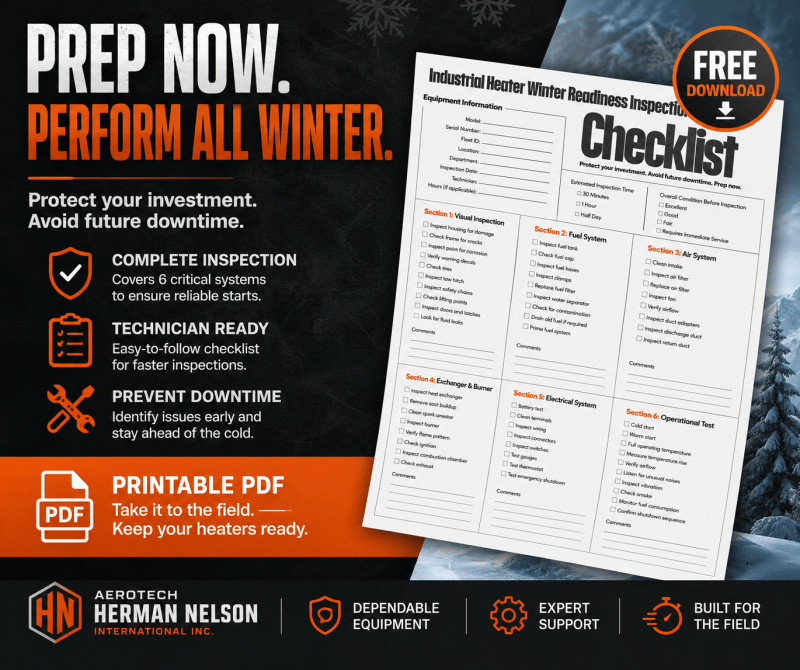
Table of Contents
- Why Heater Maintenance Matters Before Winter
- Industrial Heater Maintenance Checklist
- Fuel System Inspection
- Filters, Hoses, and Batteries
- Burners, Ducting, and Controls
- When to Book a Professional Inspection
- FAQ
- Final Winter Readiness Steps
Why Heater Maintenance Matters Before Winter
Cold weather often exposes equipment issues that remained hidden during warmer months. A heater that performed well last season may still develop problems from normal wear and tear, extended storage periods, or incomplete maintenance. Fuel contamination, worn hoses, dirty filters, weak batteries, damaged ducting, and control system issues can all affect heater performance when reliable heat is needed most.
For construction sites, aviation operations, oil and gas facilities, rental fleets, mining operations, and emergency response teams, heater failure can create more than inconvenience. Unexpected downtime can delay projects, disrupt operations, impact worker comfort, and increase repair costs during the busiest time of the year. As a result, many organizations schedule inspections and preventative maintenance before winter arrives to help improve reliability and reduce the risk of unexpected equipment failures.
Industrial Heater Maintenance Checklist
| Component | Inspection Item | Potential Consequence |
| Fuel system | Leaks, contamination, flow issues | Prevents startup and performance problems |
| Filters | Dirt, clogging, restricted flow | Supports clean fuel and airflow |
| Hoses | Cracks, wear, loose fittings | Reduces leaks and failure risk |
| Batteries | Charge level and connections | Helps ensure reliable startup |
| Burners | Clean operation and ignition | Supports consistent heating |
| Ducting | Tears, blockage, connection points | Protects airflow and heat delivery |
| Controls | Switches, gauges, shutdowns | Confirms safe operation |
| Manuals | Model-specific procedures | Helps follow proper maintenance steps |
Fuel System Inspection
Start by checking the fuel tank, fuel lines, fittings, and filters. Look for leaks, contamination, old fuel, damaged caps, loose connections, and signs of corrosion. If the heater has been stored for an extended period, inspect the fuel for water, debris, or deterioration that could affect performance.
Fuel-related problems are among the most common causes of startup and operating issues. Restricted fuel flow, contaminated fuel, or damaged fuel system components can reduce heater efficiency, create ignition problems, and lead to unexpected shutdowns during cold-weather operation. Identifying these issues before winter helps improve reliability when dependable heat is required.
Filters, Hoses, and Batteries
Inspect and replace filters that appear dirty, restricted, or damaged. Clean filters help maintain proper fuel delivery and airflow, which are both critical for efficient heater operation. During the inspection process, also check hoses for cracking, stiffness, leaks, abrasion, and loose connections that may have developed during storage or previous use.
Test batteries before winter arrives and verify that terminals remain clean, secure, and free of corrosion. Cold temperatures place additional strain on batteries and can expose weaknesses that may not appear during warmer weather. Reliable battery performance helps ensure heaters start quickly and operate as expected during cold-weather operations.
Burners, Ducting, and Controls
Inspect the burner area for soot, buildup, ignition issues, unusual odors, excessive smoke, and other signs of abnormal operation. A clean and properly functioning burner helps maintain efficient combustion, consistent heat output, and safe operation throughout the heating season.
Next, inspect ducting for rips, crushed sections, loose connections, worn attachment points, and airflow restrictions. Damaged ducting can reduce heating efficiency and prevent warm air from reaching the intended area.
Finally, test controls, gauges, emergency shutoffs, thermostats, and safety devices before deploying the heater. Confirm that indicators respond correctly and that shutdown systems function as intended. Properly functioning controls help operators maintain safe, reliable, and consistent heater performance throughout winter operations.
Common Issues Found During Pre-Season Heater Inspections
During pre-season inspections, technicians frequently identify issues that developed during storage or previous winter operation. Some of the most common findings include fuel contamination, restricted filters, worn hoses, weak batteries, damaged ducting, loose electrical connections, and burner performance concerns.
In many cases, these issues remain unnoticed until heaters return to service and encounter increased demand during cold weather. As a result, a small maintenance concern can quickly become a startup problem, performance issue, or unexpected equipment failure.
For organizations that depend on temporary heat for construction, aviation, oil and gas, rental, mining, or emergency response operations, identifying these issues before winter arrives can help improve reliability and reduce operational disruptions during the heating season.
When to Book a Professional Inspection
Routine maintenance can identify many common issues before winter arrives. However, some problems require a more detailed inspection to ensure the heater operates safely and reliably throughout the heating season.
Consider scheduling a professional inspection if the heater has not been serviced recently, experienced operational issues last winter, or will be deployed in a critical application where dependable heat is essential. Rental fleet equipment, heavily used units, and heaters that have been stored for extended periods may also benefit from a comprehensive inspection before returning to service.
In addition, investigate any startup difficulties, fuel system concerns, airflow restrictions, unusual burner operation, excessive smoke, or control system faults before placing the heater back into operation. Addressing these issues early can help reduce unexpected downtime, improve reliability, and prevent more costly repairs later in the season.
FAQ
A checklist should include fuel systems, filters, hoses, batteries, burners, ducting, controls, safety devices, manuals, and annual inspections.
Industrial heaters should be inspected before the busy winter season begins, ideally during the off-season or early fall.
Damaged or restricted ducting can reduce airflow, limit heat delivery, and create performance problems.
Yes, filters should be inspected and replaced if dirty, restricted, or overdue for service.
Contact Aerotech Herman Nelson if your heater needs inspection, parts, accessories, manuals, troubleshooting help, or overhaul service.
Service intervals vary by heater model, operating conditions, and annual usage. However, most industrial heaters benefit from routine inspections before winter and regular maintenance throughout the heating season. Always follow manufacturer recommendations and service schedules.
Yes. Fuel that has been stored for extended periods can become contaminated by water, debris, or degradation. Poor fuel quality can contribute to startup issues, reduced performance, ignition problems, and unexpected shutdowns during operation.
Operators can typically perform visual inspections, check fuel systems, inspect hoses and ducting, test batteries, verify control operation, and replace certain serviceable components. However, qualified technicians should investigate complex fuel, electrical, burner, or control system issues.
Preventative maintenance helps identify worn components, fuel system issues, airflow restrictions, and control problems before cold weather arrives. As a result, organizations can reduce downtime, improve reliability, and prepare equipment for peak winter demand.
Yes. The downloadable Industrial Heater Winter Readiness Inspection Checklist is designed as a printable field document that can be completed for each heater in your fleet. It includes space for equipment information, inspection results, technician notes, and final service recommendations, making it useful for documenting pre-season inspections across multiple units.
Final Winter Readiness Steps
Before winter arrives, inspect your industrial heater carefully. First, review the fuel system, filters, hoses, batteries, burners, ducting, and controls. Next, replace worn parts, clean restricted components, and confirm that safety controls work properly. As a result, your team can reduce downtime and prepare equipment before cold weather creates problems.
In addition, routine maintenance helps crews avoid last-minute service requests during the busiest heating season. Most importantly, it gives your team more confidence when heaters need to start quickly and operate reliably.
Need Assistance Before Winter?
Routine maintenance can help reduce downtime, improve reliability, and prepare your equipment for cold-weather operation. If your heater needs replacement parts, technical support, manuals, or a professional inspection, our team is here to help.
In addition, if you’re evaluating equipment for an upcoming project, download our Industrial Heater Selection Guide to compare heater types, airflow requirements, and application considerations before winter demand increases.
Whether you need technical support, replacement parts, service manuals, inspections, or overhaul services, the Aerotech Herman Nelson team can help prepare your equipment for the heating season.
- Download the Winter Readiness Inspection Checklist
- Book an Inspection
- Contact Our Team
- Download Heater Manuals
- Browse Parts & Accessories
Related Resources
Proper maintenance is only one part of winter readiness. Whether you need technical support, replacement parts, service documentation, equipment inspections, or assistance planning future heating requirements, the following resources can help you prepare your equipment and operations before cold weather arrives.
Support Page
Readers who discover maintenance issues during their inspection may need troubleshooting assistance or technical guidance. Linking to the Support Page provides access to resources and expert assistance when heater problems require additional attention.
Learn more on our Heater Support Page.
Parts & Accessories
Routine maintenance often identifies worn or damaged components that require replacement. Linking to the Parts & Accessories page helps readers quickly locate commonly needed service parts before winter demand increases.
Browse available Parts & Accessories.
Overhaul Services
Some heaters may require more than routine maintenance to remain reliable during winter operation. Linking to the Overhaul Services page introduces readers to refurbishment and preventative service options that can help extend equipment life.
Explore our Heater Overhaul Services.
Download Manuals
Manufacturer recommendations and model-specific procedures play an important role in proper maintenance. Linking to the Download Manuals page helps readers access operating instructions, maintenance schedules, and technical documentation.
Download Heater Manuals.
Contact Sales
Some readers may have questions about maintenance requirements, equipment upgrades, replacement heaters, or application-specific recommendations. Linking to the Contact Page creates a direct path to connect with the Aerotech Herman Nelson team.
Contact Aerotech Herman Nelson.
BTU Calculator
Winter readiness involves more than maintenance alone. Readers planning upcoming projects may also need to confirm their heating requirements. Linking to the BTU Calculator provides a simple way to estimate heating demand and evaluate equipment needs.
Use the BTU Calculator.