🍂 Fall Is Coming—Are You Ready?
Choosing the right heater this fall isn’t just about staying warm—it’s about staying in business. You already know what cold weather can do to a job site: frozen machinery, unsafe working conditions, lost productivity, and sky-high repair bills.
That’s why now—before the first frost—is the best time to get ahead of it.
Let’s walk through the most important things you should be thinking about right now. I’ll help you figure out what kind of heater makes sense, how to evaluate your environment, and which models are built to take whatever fall (and winter) throws your way.
Because let’s face it—waiting until it’s cold is just too late.
🔍 Why Choosing the Right Heater This Fall Matters
Fall isn’t the finish line—it’s the kickoff to the toughest season your equipment will face.
You need heat you can trust. Not just any heat—the right heat for your job site, your environment, and your crew. That means looking at more than just BTUs and price tags. It means thinking about:
- Where you’re working (remote, urban, emergency site?)
- How you’ll fuel it
- What kind of airflow or ducting you’ll need
- And, most importantly, whether it’s ready when you are
❄️ Pro tip: Not sure what size of heater you need? Use our BTU Calculator to get the numbers right—before the temperatures drop
🧭 Let’s Break It Down: How to Choose the Right Heater This Fall
1. Start with Your Job Site Needs
Before you even look at product names, get clear on your job site’s demands:
- No power on site? You’ll need a stand-alone heater like the BT400 NEX Series.
- Tented areas or long ducting? Campo Blaze Heaters have serious reach.
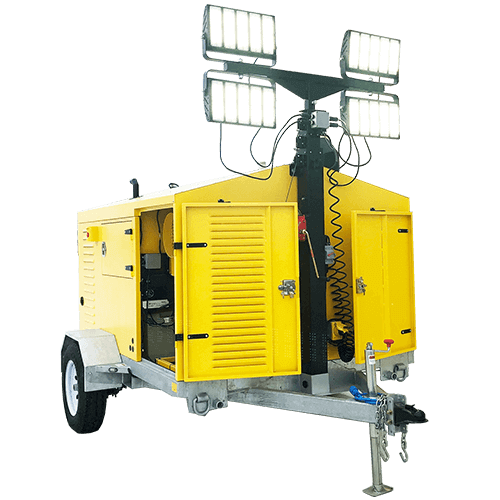
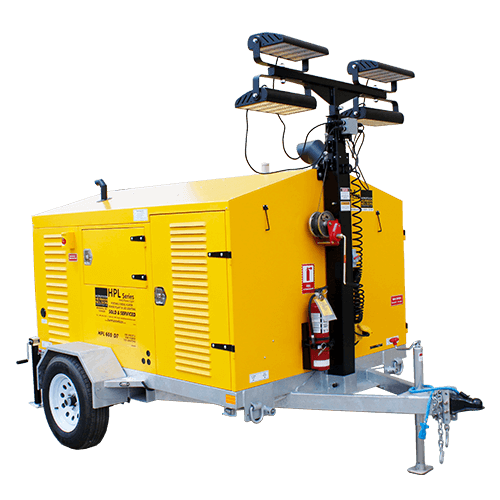
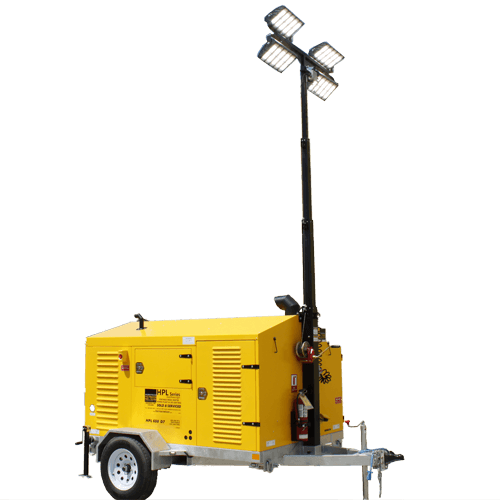
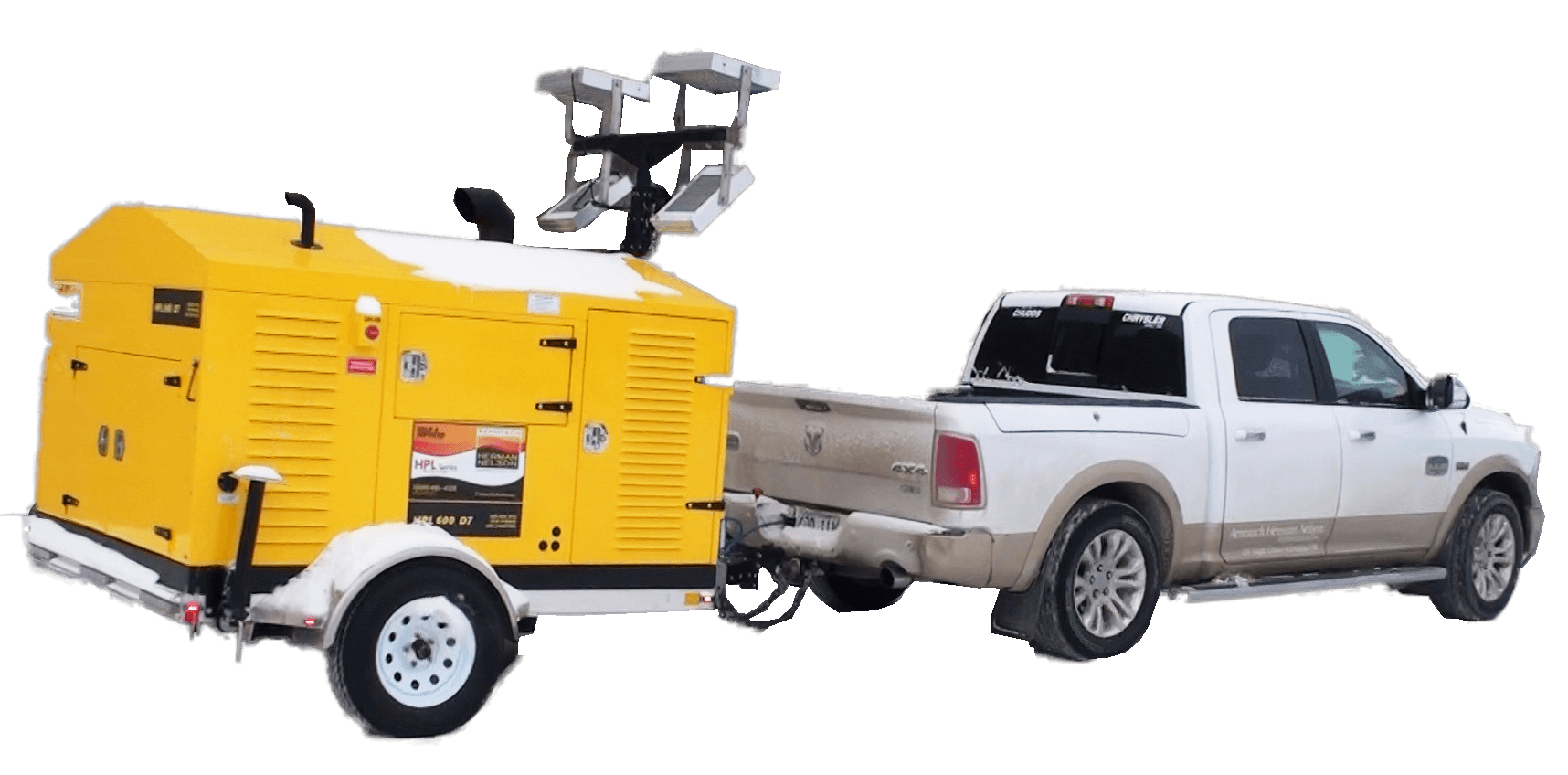
- Need lighting, heat, and power? The HPL 600D7 is your all-in-one workhorse.
2. Match the Heater to the Application
🔥 Let’s Look at Real-World Applications—and the Heaters That Deliver
When you’re choosing the right heater this fall, remember—one size doesn’t fit all. It’s important to consider your job site conditions, layout, and heating goals. Let’s walk through three common scenarios and match each to a proven heater solution.
🔧 Remote Sites, Disaster Zones & Emergency Response
Your Pick: HPL 600D7 – The All-in-One First Responder
When you’re miles from the grid or working in unpredictable disaster zones, power, heat, and light aren’t luxuries—they’re non-negotiables. That’s exactly what makes the HPL 600D7 a standout.
This unit doesn’t just provide powerful indirect-fired heat—it also includes a built-in generator and tower lighting, all packaged into a single towable unit. It’s a self-contained command center, ideal for mobile field hospitals, emergency shelters, and military field operations.
You get:
- Up to 19 hours of continuous run time at 100% load
- Recirculating air for better fuel efficiency
- Compatibility with external fuel cells
- Discharge up to 150 ft and inlet up to 50 ft
Whether you’re responding to wildfires, hurricanes, or supporting a pop-up command center, this heater gives you one less thing to worry about.
Also worth a look:
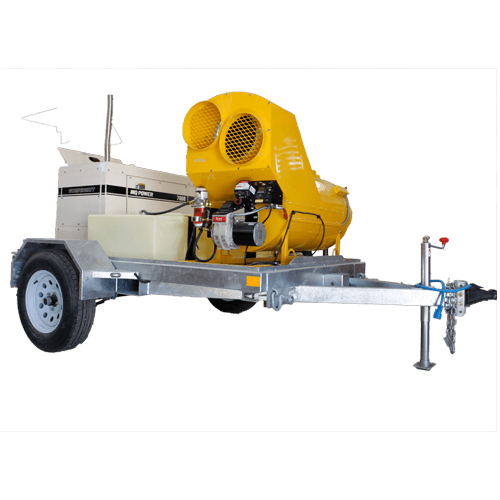
👉 The Campo Blaze Series (200, 400, and 600D Turbo models) offer recirculating heat, long ducting runs, and airflow up to 5,500 CFM. These are excellent when space is tight but airflow and reliability are non-negotiable.
🏗 Construction Sites & Aviation Ground Support
Your Pick: BT400 NEX SERIES (D & G Models) – The Cold Weather Workhorse
On construction sites and airport runways, you don’t have time to mess around with unreliable equipment—especially when the mercury drops.
The BT400 NEX SERIES is built to run hard, last long, and perform without needing an external power source. It’s a go-to heater for aviation hangars, job site trailers, remote pads, and equipment warm-up zones.
Key advantages:
- Available in diesel or gasoline-powered models
- Stand-alone operation with no external power required
- Ducting flexibility for targeted heat placement
- Over 400,000 BTUs of heating capacity
- Designed for extreme climates, tested in the coldest conditions
Aviation teams use the BT400 NEX to defrost equipment, pre-heat planes, and ensure safe working conditions on runways. Construction teams use it to warm concrete curing sites, temporary shelters, and large indoor build-outs. In both cases, performance equals productivity—and the BT400 delivers.
Also solid:
👉 The Frost Fighter 500 or 350 offers dependable indirect heat at a lower price point. These units are widely used in construction and work well for mid-sized projects, trailers, or supplementary heat on bigger sites.
🎪 Tents, Temporary Structures & Long-Distance Heat Needs
Your Pick: Campo Blaze 400D or 600D Turbo – The Event & Shelter Specialist
When your heat source is outside and your people are inside, ducting distance becomes everything. Whether it’s a wedding tent in November or a community emergency shelter, the Campo Blaze 400D and 600D Turbo units give you reach, power, and consistency.
Why they shine:
- Duct up to 150 ft of supply and return air
- Powerful airflow from 2,750 to 5,500 CFM
- Efficient fuel usage and long runtimes (up to 32 hours)
- Recirculating design minimizes fuel consumption and emissions
- OMNI-certified to CSA/UL standards
Event planners, rental companies, and disaster response coordinators love these units because they can be set up quickly, moved easily, and adapted to a wide range of structures. You get warmth where it’s needed—without overwhelming your layout or your fuel budget.
Need something smaller?
👉 Check out the Blaze 200 DG Turbo, a compact recirculating heater perfect for smaller structures, backstage warm-up zones, or as a backup unit.
🧠 Technical Considerations That Make or Break Your Heater Choice
Choosing the right heater isn’t just about matching models to job types — it also means understanding the technical performance behind each unit. The following specs play a critical role in how effectively your heater will perform once the cold sets in:
🔥 BTU Output
BTU stands for British Thermal Unit, which measures the amount of heat a heater can produce. Choosing a unit with too few BTUs won’t warm your space, while one with too many may burn fuel inefficiently.
To calculate the correct BTU load, consider:
- Square footage of your space
- Insulation and building materials
- Outside vs. target inside temperature
- Air changes per hour (ACH)
👉 Try our BTU Calculator to get started.
🌬 Airflow (CFM)
CFM, or Cubic Feet per Minute, indicates how much air a heater can move. High BTU output means little if air can’t circulate properly.
When airflow matters:
- Look for high CFM ratings if heating large spaces
- Choose heaters with enough static pressure to push air through long ducting
- Consider how airflow affects even heating across zones
🧱 Ducting Capability
When heaters are placed outside the structure (e.g., tents or trailers), ducting determines how far heat can travel and how efficiently it’s delivered.
To optimize:
- Use heaters rated for long duct runs (100–150 ft)
- Match duct size (e.g., 12” diameter) to airflow needs
- Minimize bends or restrictions in the duct layout
For example, the HPL 600D7 supports up to 150 ft of discharge ducting and 50 ft of inlet return, ideal for remote or large-volume heating.
🔁 Duty Cycle and Runtime
The duty cycle measures how long a heater runs before cycling off. Efficient heaters maintain temperature with fewer on/off cycles, improving fuel economy and reliability.
Look for:
- Long runtimes (19+ hours at 100% load)
- Compatibility with external fuel cells
- Smart thermostat integration for consistent heat without overfiring
This matters in 24/7 operations, where downtime isn’t an option and remote monitoring is limited.
🔁 Already Have Equipment? Let’s Make It Last
If you’re thinking, “I already have a heater,” great! But when’s the last time it was serviced?
Don’t risk mid-season breakdowns. Our Heater Overhaul Program can breathe new life into your equipment. We inspect, test, and replace the parts most likely to fail under pressure. Better performance, longer life, fewer headaches.
💡 Click here to schedule your overhaul before the rush hits.
🔩 Don’t Skip the Accessories (They Matter)
You’d be amazed how much more efficient your heater becomes with the right gear:
- Thermostats to dial in comfort & fuel usage
- Return air kits for improved recirculation
- Ducting & diffusers to direct airflow exactly where needed
- Extended fuel tanks to keep things running through the night
It’s like upgrading from a hammer to a toolbox—you’ll wonder how you managed without it.
✅ Your Fall Heating Checklist
Let’s make sure you’ve got all your bases covered before the cold hits:
✔️ BTU load calculated (use our calculator)
✔️ Heater selected based on application
✔️ Parts & accessories ordered
✔️ Maintenance or overhaul scheduled
✔️ Backup plan in place
✔️ Units reserved before fall lead times spike
📞 Ready to Talk Heat? We’re Here.
Still not sure about choosing the right heater this fall? That’s what we’re here for. Whether you need one unit, ten, or a full seasonal plan—we’ll help you figure it out. No pressure. Just solid advice from a team that knows cold.
Want to learn more? Contact us at:
AEROTECH HERMAN NELSON INTL. INC.
📍 100 Eagle Drive, Winnipeg, MB, CANADA, R2R 1V5
📞 Outside of Canada: 1 (800) 486-4328
📞 Within Canada: 1 (204) 633-1999
📧 Email: Sales@hermannelson.com
📠 Fax: 1 (204) 694-1612
🕒 Hours: Mon – Fri: 8:00am – 4:30pm CDT
Canadian Innovation. Shipped Without Borders.